

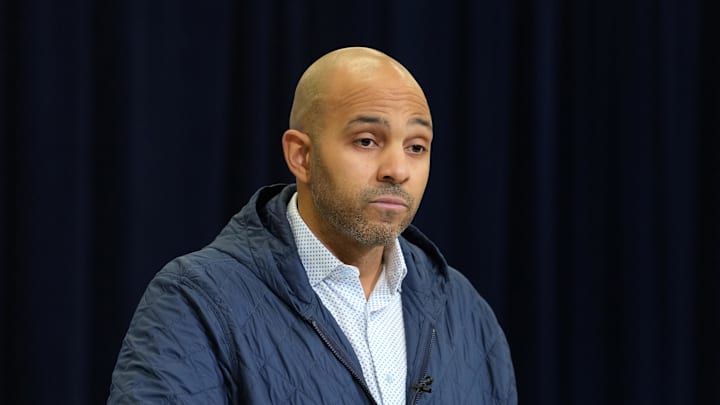
If you’ve been trying to make sense of the Atlanta Falcons’ offseason, one NFL analyst may have summed it up better than anyone else with a single word: “bridge.” That’s how Bleacher Report’s Alex Ballentine described the Falcons’ 2026 approach. And when you look at what this team has actually done over the last few weeks, it’s hard to argue otherwise.
“The Falcons have made some interesting moves in Kevin Stefanski's first offseason.” Alex Ballentine said. “However, none of them have impact beyond 2027. They franchise tagged Kyle Pitts and mostly signed one-year deals meant to inject some competition into the roster to get to next offseason, including Tua Tagovailoa.”
The Falcons needed a reset. And that’s exactly what this offseason looks like. No move captures that “bridge” mentality more than the signing of Tua Tagovailoa. Tagovailoa is coming off a rough 2025 season and carries durability concerns. But financially? It’s almost risk-free.
The Atlanta Falcons' offseason has proven that they're willing to give up on being competitive in 2026 to better their long-term outlook
Because of offset language tied to his previous deal with the Miami Dolphins, Atlanta landed a former Pro Bowl-caliber quarterback for the veteran minimum. That’s not a franchise altering commitment, it’s a placeholder with upside.
And that’s the key
Tagovailoa isn’t being asked to be the long-term answer. He’s there to compete, stabilize the position early if needed, and buy time for Michael Penix Jr., who is still recovering and still unproven. It’s the definition of a bridge quarterback situation. He'll likely start until Penix is ready or he struggles.
Why “bridge” fits perfectly
The same philosophy shows up across the roster.
- Kyle Pitts was retained but via the franchise tag, not a long term extension
- Depth receivers like Jahan Dotson were added without major financial commitment
- Veterans were brought in across the defense to raise the floor, not redefine the ceiling
- Familiar faces like Austin Hooper returned on short deals
Even the departures tell the same story. The Falcons let solid contributors walk rather than overextend financially, signaling a clear willingness to absorb short term pain for long term flexibility. They’re bridging the gap between a failed era and whatever comes next.
- Bridging from the Kirk Cousins contract fallout
- Bridging toward a real evaluation of Penix
- Bridging into a future where they’ll have more cap space and a first round pick again
- Bridging a roster that lacked identity into one that (eventually) has one
And they're doing it in a division that’s still wide open. If things break right, Atlanta could still compete in 2026. If they don’t, the team is positioned to pivot quickly in 2027.
“Bridge” might not be the most exciting word. But for the Falcons, it might be the most honest one. And this offseason is about getting to the point where being great is finally possible.
 Add us as a preferred source on Google